Built for ourselves first.

Dictio was born inside Zehntech, and our own teams were its first users. These are the two problems it solved for us before it ever had a website.
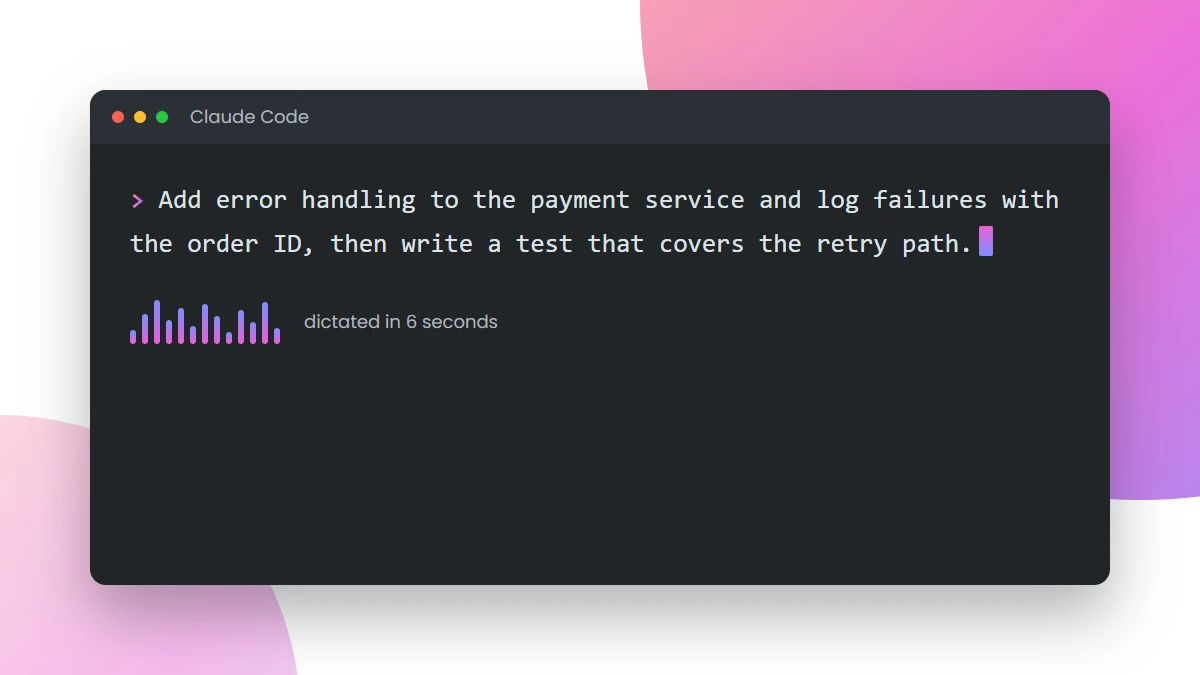
Image link

Engineering · AI coding workflows

Prompting at the speed of thought

Our engineers spend a large part of their day directing AI coding tools like Claude Code and Cursor. A good prompt is long: the architecture, the constraint, the edge case, all spelled out. Typing 200 to 500 words at around 40 words per minute, several times an hour, meant our fastest thinkers were working at the speed of their fingers. On long days, wrists felt it too.

What we did
Push-to-talk dictation on every engineer’s machine: hold the hotkey, describe what you want as if explaining it to a colleague, release into the tool’s text field. The cleanup pass strips the filler and fixes the punctuation, so a spoken ramble arrives as a readable brief.
What changed
Prompts now happen at speaking speed: a 300-word prompt takes about two minutes out loud instead of ten at the keyboard. And they got better, not just faster. When describing context costs nothing, people include more of it, and the AI’s output improves with it. Dictation is now the default way our engineers talk to their tools, and the reason Dictio exists.

Delivery teams · Documentation

From call recordings to same-day notes

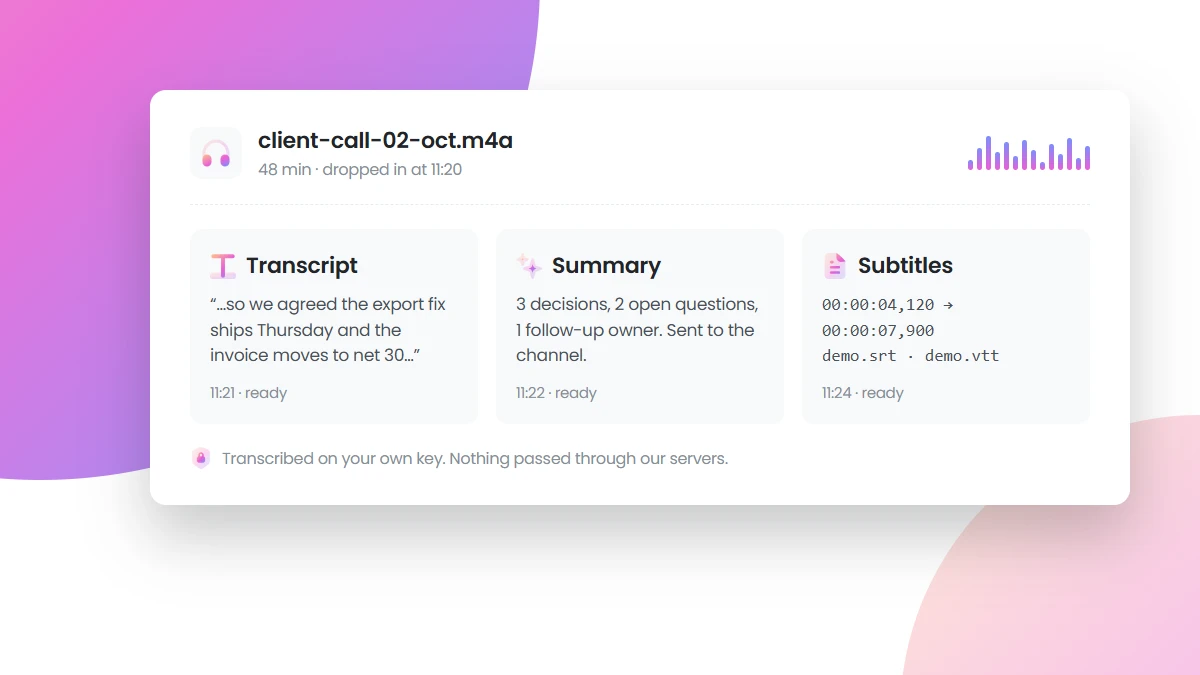
Client calls, sprint reviews and internal demos were being recorded and then quietly piling up. Notes got written from memory hours later, details drifted, and decisions were paraphrased instead of quoted. Subtitling product demo videos meant sending files out and waiting.

What we did
Recordings now get dropped straight into Dictio. Long calls come back as transcripts; the ones nobody will replay come back as summaries. Demo and tutorial videos get SRT or VTT subtitle files from the same tool. Everything lands in a searchable local history, so “what exactly did we agree in that call” is a search, not an archaeology project.
What changed
Call notes go out the same day, with decisions quoted from the transcript instead of reconstructed from memory. Subtitles happen in-house, the day the video is cut. And because transcription runs on our own key and nothing passes through extra servers, recordings of client conversations stay exactly where they should.
Image link

Your team has the same two problems.

Start free and see what changes in a week
Your own key, nothing on our servers
macOS, Windows, iPhone and Android